

Last Updated on 9 March 2026

Imagine hiking through a dense, emerald green forest and suddenly seeing majestic battlements towering above you. Or strolling through a sprawling park and coming across a magnificent, mirror-smooth castle surrounded by a tranquil lake. What sounds like the beginning of a fairy tale is a reality in Germany. With over 25,000 buildings, Germany is the ultimate destination for explorers and history lovers.
Castle vs. palace: do you know the difference?
The terms are often used synonymously, but historically there is an interesting difference in their definition:
Why are these structures so special?
Germany’s castle landscape is unique in the world. This is mainly due to these four factors:
- ✓ Enormous diversity: From small robber baron castles to gigantic fairytale palaces. font-weight: bold;‘>✓Living history: Each ruin was once a centre of power or a place of refuge.
- ✓ Pure romance: Legends and myths surround almost every ruin.
- ✓ Spectacular locations: Nestled among vineyards, rivers or on rugged rocky peaks.
Famous landmarks you must see
1. Neuschwanstein: The world-famous fairytale castle
High up on a rugged rock in the Bavarian Alps sits Neuschwanstein, probably the most famous castle in the world. King Ludwig II of Bavaria had this imposing building constructed in the 19th century as a retreat into an idealised medieval world. The architecture is so fantastic and rich in detail that it served as direct inspiration for Walt Disney’s legendary Sleeping Beauty castle.
It’s not just the magnificent interiors, such as the throne room, that make a visit worthwhile: a walk to the Marienbrücke bridge offers breathtaking panoramic views of the castle and the sparkling lakes of the Allgäu. It is the epitome of German romanticism and an absolute must for any trip to southern Germany.
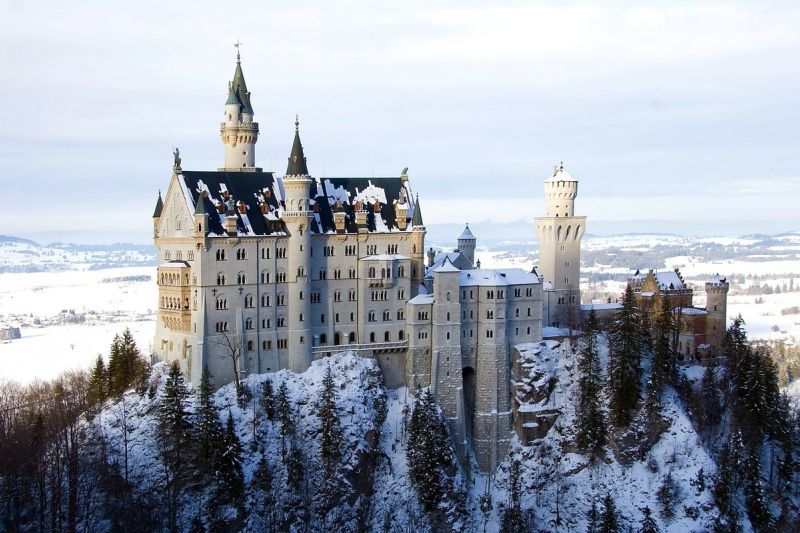
Majestic and mystical: Neuschwanstein in the heart of the Bavarian Alps. Image from Pixabay
2. Hohenzollern Castle: The Prussian fortress in the south
Hohenzollern Castle rises at the top of the striking Zollernalb mountain. It is not only one of the most impressive fortresses in Germany, but also the ancestral seat of the Prussian royal family and the princes of Hohenzollern. The current complex was rebuilt in the 19th century in neo-Gothic style and, with its many towers, looks like an impregnable crown on the mountain.
Today, the castle houses a fascinating museum where you can admire the Prussian royal crown, among other things. The castle also offers a spectacular 360-degree view of the Swabian Alb, which on a clear day extends as far as the Swiss Alps. For history fans, this place is a living testimony to German aristocratic culture.
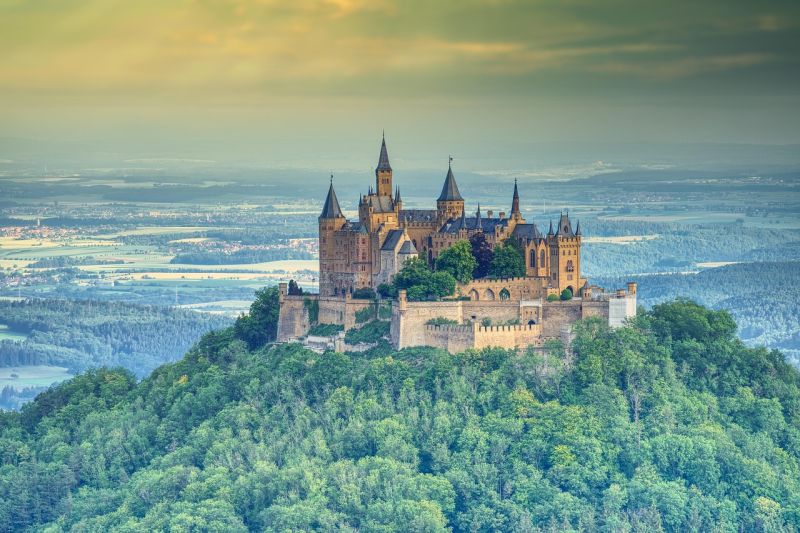
A majestic landmark: Hohenzollern Castle above the Zollernalb. Image by Pixabay
3. Heidelberg: The most romantic ruin in the world
Heidelberg Castle sits picturesquely above the historic old town and the River Neckar. Once the residence of the Electors Palatine, the complex was severely damaged in the 17th century by wars and a devastating lightning strike. Instead of rebuilding it completely, it was decided to preserve the ruins in their current state, giving them an incomparable, melancholic charm.
Today, the castle is the symbol of German Romanticism par excellence. Visitors can view the huge Heidelberg wine barrel or stroll through the castle gardens (Hortus Palatinus), which offer a fantastic view of the old bridge. For our language students in Heidelberg, a visit to the Schlossberg is an essential part of experiencing history right on their doorstep.
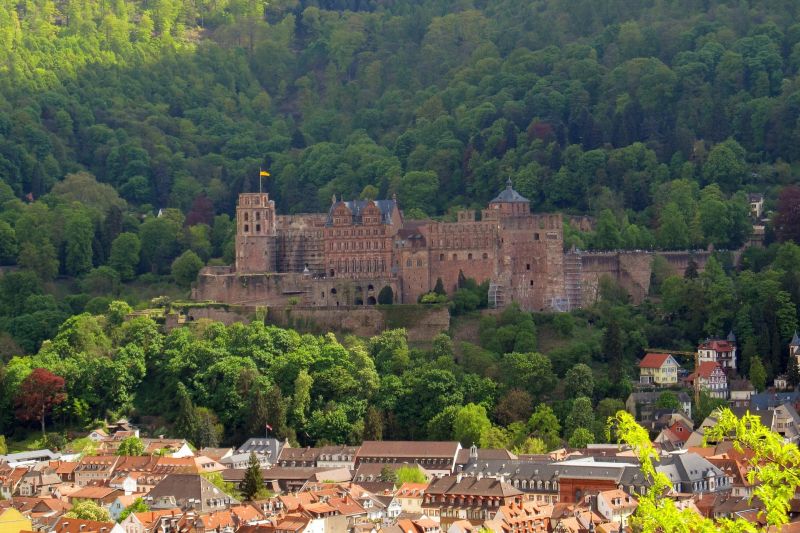
Symbol of romanticism: Heidelberg Castle above the rooftops of the old town. Image by Pixabay
Learn German in Heidelberg
Would you like to admire Heidelberg Castle every day after class? Our language school is located right in the heart of this historic city.
4. Charlottenburg: The Prussian Versailles
In the heart of the vibrant capital city of Berlin, Charlottenburg Palace is an oasis of calm and elegance. Built in the late 17th century, it was the largest and most magnificent summer residence of the Prussian kings. The Baroque façade and golden dome with the goddess of fortune, Fortuna, are landmarks of the Charlottenburg district that can be seen from afar.
The palace impresses with its magnificent halls, such as the Golden Gallery, and its valuable porcelain collections. Particularly popular is the extensive palace garden, which was laid out in the French style and today invites visitors to stroll and relax. It shows a side of Berlin that is regal and magnificent – a perfect contrast to the modern hustle and bustle of the metropolis.
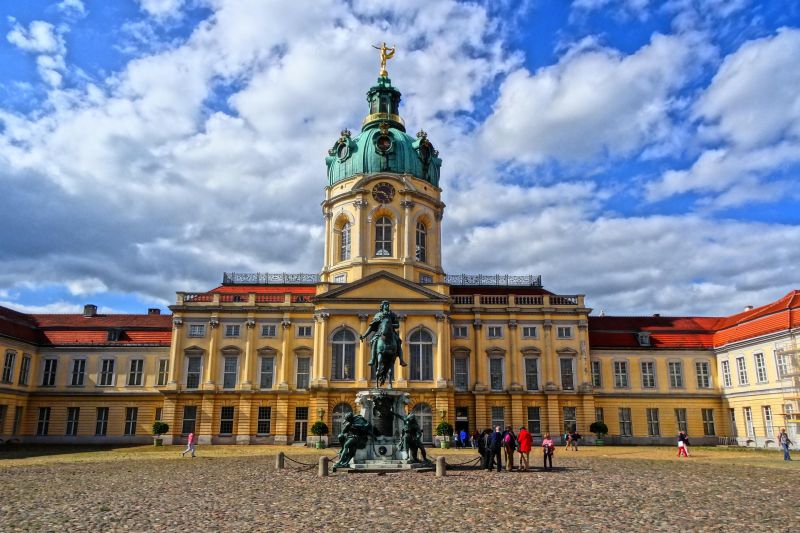
Royal splendour in Berlin: the magnificent Charlottenburg Palace. Image by Udo Röbenack on Pixabay
Experience history in Berlin
From Charlottenburg Palace to the Berlin Wall, discover the capital city with an intensive course on site.
Interesting facts
- There are over 25,000 castles and palaces in Germany.
- Many castles are now luxury hotels.
- Some complexes are still privately owned by noble families.
Tips for your visit
Shoes: Pack comfortable sneakers, as the paths are often steep and uneven.
Camera: The photo opportunities are perfect for your Instagram feed!
Tickets: Be sure to book guided tours (especially in Neuschwanstein) weeks in advance.
Ready for your own fairy tale?
A visit to a German castle is more than just sightseeing, it’s history you can touch and pure culture. Book a language course, pack your bags, and discover the magical side of Germany!
Are you planning a school trip with a cultural highlight?
Castles and palaces are the perfect places for extracurricular learning. We not only organize language courses for your group, but also excursions to Germany’s most beautiful landmarks.


