
Last Updated on 4 March 2026

Germany is known worldwide for its first-class medical care. But newcomers to the country are often faced with a mountain of unfamiliar terms: compulsory insurance, chip cards, co-payments and the Association of Statutory Health Insurance Physicians. In this detailed guide, we break down the system for you. We show you how to get the best coverage, how to find the right doctor and why you never have to worry about high hospital bills in Germany.
Important to know: Health insurance is compulsory in Germany. This means that everyone who lives here must be insured. This guarantees you the highest level of care in an emergency without having to pay horrendous bills yourself.
The basics: statutory or private?
The system is based on the principle of solidarity: contributions are based on your financial capacity, but the quality of medical care is the same for everyone. There are two types of health insurance:
- Statutory health insurance (GKV): Over 90% of people are insured here (e.g. TK, AOK, Barmer). It is the standard choice for students and employees.
- Private health insurance (PKV): Usually only available to those with a very high income or the self-employed.
For language students, there are often special incoming insurance policies that are tailored to the visa requirements and duration of your course.
Your admission ticket: the electronic health card (eGK)
Once your insurance contract is in place, you will receive your health card with your photo on it. Your data is stored on the chip. In Germany, you do not normally have to pay in advance when you visit the doctor; the practice bills your health insurance company directly.
Finding the right doctor
We recommend the family doctor model: find a general practitioner in your area. They will be your first point of contact for everything. If you need more specialised care, they will refer you to a specialist (e.g. orthopaedist or cardiologist). The easiest way to book appointments is via apps such as Doctolib or Jameda.
Prescriptions and pharmacy culture
In Germany, genuine medicines (including aspirin) are only available from pharmacies, not supermarkets. A distinction is made between:
- Red prescription / e-prescription: Prescribed by a doctor. You only pay a small co-payment (approx. £5–10), the rest is covered by your health insurance.
- Green/blue prescription: Recommendations or private prescriptions that you pay for yourself.
Recently, this has often been done digitally: insert your card at the pharmacy and receive your medication, no paper required.
Hospital emergency room: When is it a real emergency?
The hospital emergency room is intended exclusively for serious, life-threatening emergencies (e.g. suspected heart attack, stroke or serious accidents). If you feel ill but your life is not in danger and your GP’s surgery is closed, the emergency room is not the right place to go.
In such cases, you should first call the medical on-call service on 116117. They will tell you which on-call practice is open in your area. This will help keep the emergency rooms free for real life-saving cases.
For a detailed overview of who to call in which situation, take a look at our Guide to emergency numbers in Germany.
The ambulance: help on four wheels
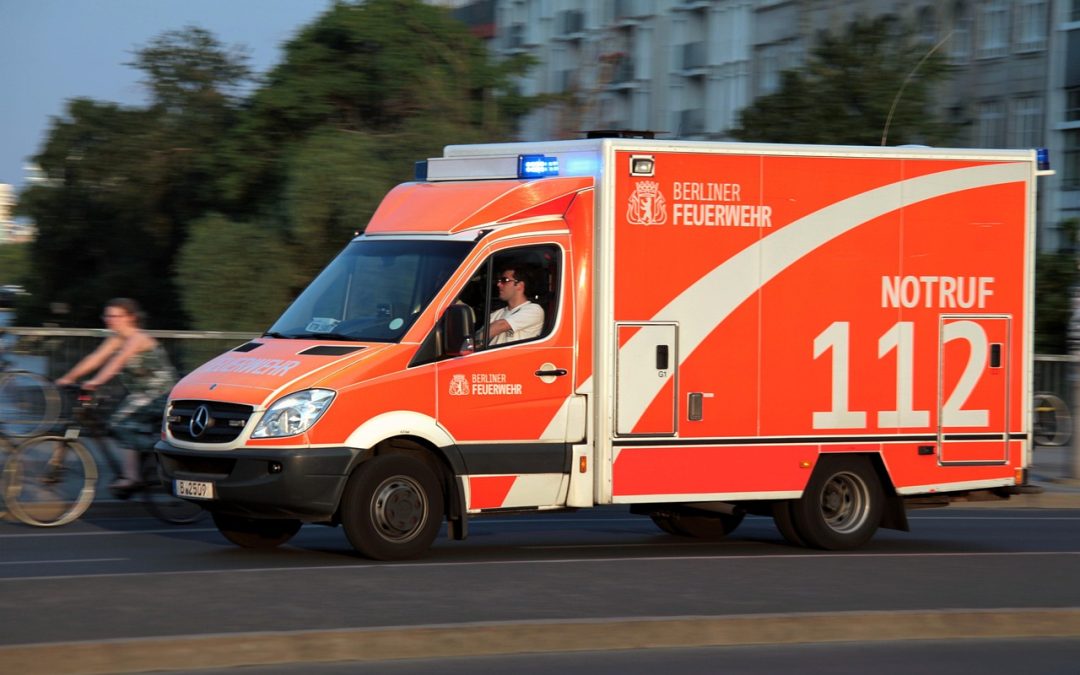
An ambulance is called when every minute counts. You can request one by dialling the emergency number 112. The experts at the control centre will decide whether to send an ambulance based on your description of the situation.
You can find out how best to behave during such a call and what information is important in our article on emergency numbers in Germany.
In a medical emergency, the health insurance company covers almost all costs. You will usually only have to pay a statutory co-payment of 5 to 10 euros. Please note: Anyone who calls the emergency services without good reason (e.g. for a mild cold) may have to pay for the entire cost of the call-out themselves – this can amount to several hundred euros.
Conclusion
The German healthcare system is one of the most robust in the world. Even if the bureaucracy is annoying at first, once you have your card in your hands, you can feel secure. You have access to state-of-the-art technology and highly qualified doctors without a visit to the doctor breaking your budget.
Take advantage of this security! Go for preventive medical check-ups and take care of your health so that you can enjoy your time in Germany to the fullest, whether you are taking a language course or working.
FAQ: Frequently asked questions about the German healthcare system
1. What should I do if I fall ill at the weekend?
Select 116117. This is the medical on-call service for cases that are not life-threatening but cannot wait until Monday. There you can find out which emergency practice is open in your area.
2. Does the health insurance fund also pay for my glasses or contact lenses?
3. Do I have to pay for everything myself at the dentist?
Six-monthly check-ups and simple fillings are free of charge. Professional teeth cleaning usually costs between 80 € and 140 € but many modern health insurance companies subsidise this. Just ask about their ‘bonus programme’!
Ready to experience Germany like a local?
The fastest way to truly arrive is through language. In our courses, you will not only learn grammar, but also real ‘everyday German’ for work, study and leisure.

For Your Child
German courses for children & teens
Discover our summer camps in Berlin, Munich, Vienna & more.
For You
German courses for adults
Intensive courses, long-term programmes and German certificates.


