
Last Updated on 22 February 2026

Frankfurt offers a fascinating blend of history and modernity, making it the ideal place to learn German. While you gaze out over the glittering skyline during your breaks from language learning, you will find yourself immersed in the heart of Europe. In this blog, we present exciting and surprising facts about the Main metropolis that go far beyond its image as a mere banking city. We are curious to see which of these reasons will convince you to come to Frankfurt. Write to us in the comments at the end!
Frankfurt is a city of contrasts. On the one hand, it is in the spotlight as a global financial centre, while on the other, it cultivates its cosy traditions. Those who learn German in Frankfurt benefit from an international environment and a dynamic atmosphere that is rarely found in such intensity in any other German city.
1. Financial metropolis: The beating heart of Europe
Frankfurt am Main is one of the most important financial centres in the world. This is no coincidence: as the seat of the European Central Bank (ECB) and the German Bundesbank, decisions about the stability of the euro are made here. For you, this means an extremely international environment. Everywhere in the city, you will hear a mixture of German, English, Spanish and French.
- Career focus: Many young people come here for internships or to start their careers in investment banking and asset management.
- Global player: In addition to the ECB, over 200 international banks are based in the city.
2. Skyscrapers: Welcome to Mainhattan
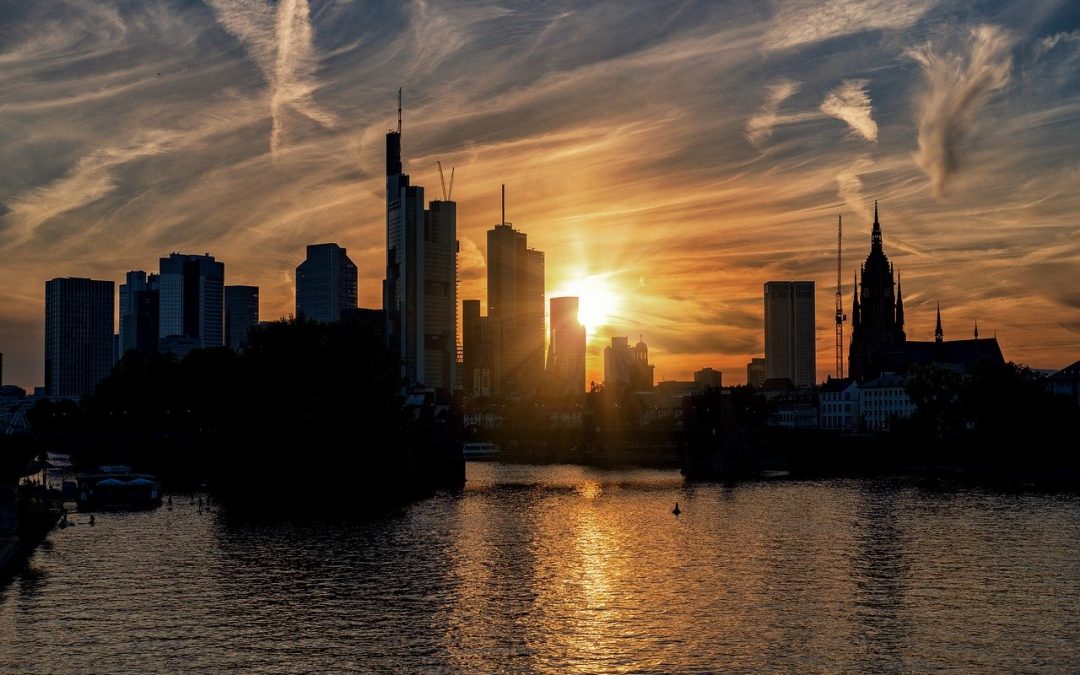
Frankfurt’s skyline is absolutely unique in Germany. Due to its many skyscrapers, the city is often affectionately referred to as ‘Mainhattan’. Standing on the banks of the Main River, you almost feel like you’re in New York. The Commerzbank Tower is the undisputed king. At 259 metres, it was the tallest building in the entire European Union for a long time.
‘In Frankfurt, you not only look at the history at your feet, but also up at the skyscrapers – this is where tradition meets the future.’
What makes it special is that the skyscrapers are very close together, creating an impressive, dense skyline that is particularly magical at sunset.
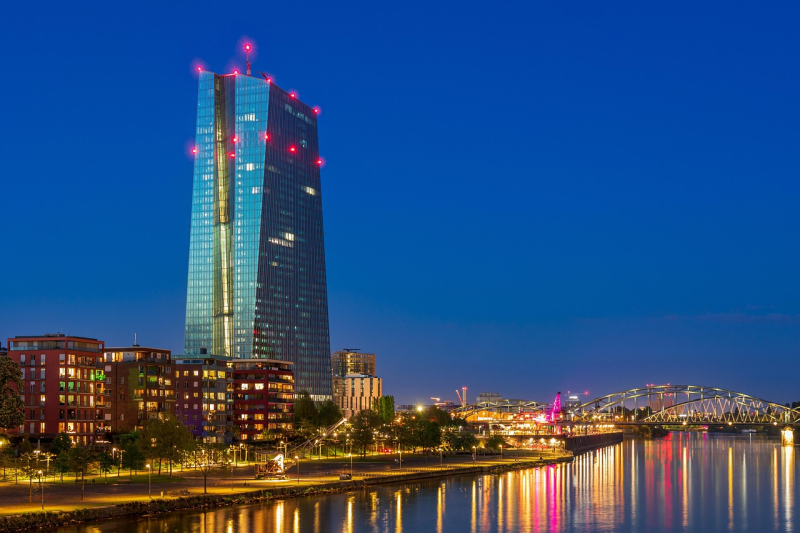
Insider tip: The European Central Bank in Frankfurt is not only impressive from the outside, but can also be visited. (Photo by pixabay)
3. Frankfurt Airport: Your gateway to the world
With around 81,000 employees, Frankfurt Airport (FRA) is the largest local workplace in Germany. It serves as a global hub, connecting Frankfurt with every continent. For travellers, it’s almost like a small town in its own right, with supermarkets, hotels and even wellness facilities.
Pro tip: Thanks to the huge long-distance train station right at the airport, you can be in Paris, Amsterdam or Brussels in just a few hours on the ICE. This makes Frankfurt the perfect base camp for weekend trips throughout Europe!
4. The Frankfurt Stock Exchange: Where bulls and bears reign supreme
The Frankfurt Stock Exchange is one of the oldest and most important stock exchanges in the world. Directly in front of the magnificent main entrance, you will find the two most famous sculptures in the financial world: the bull (for rising prices) and the bear (for falling prices).
Anecdote: Traders say that touching the bull’s horns brings good luck for your own finances. The stock exchange is also a symbol of Frankfurt’s civic pride, as it was founded by merchants rather than nobles – a true testament to the city’s independent spirit.
5. The Frankfurt Book Fair: A celebration of words
Every October, the city transforms into the world’s largest library. The Frankfurt Book Fair attracts thousands of publishers, authors and book lovers. As someone who is learning German, this is the absolute highlight. Every year, a different guest country presents its literature.
- Events: Experience readings by your favourite authors or visit the colourful cosplay scene at the weekend.
- Language: There are huge areas dedicated to ‘German as a foreign language’ – ideal for discovering the latest materials.
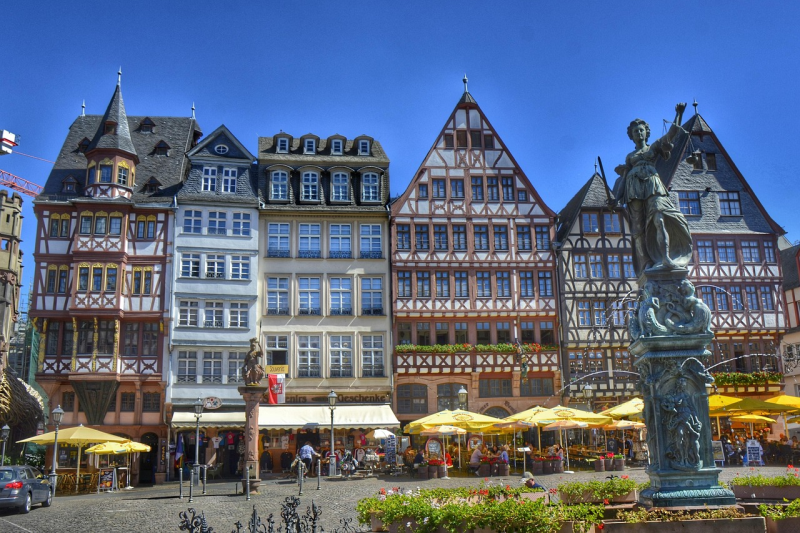
Römerberg Frankfurt: historic market square in the old town. (Image from Pixabay)
6. Frankfurt’s Old Town: Reconstructed history
After being almost completely destroyed during the war, Frankfurt’s Old Town now shines again in new splendour. The ‘Römerberg’ is its heart. Here you will find beautiful half-timbered houses that have been reconstructed with such attention to detail that you can literally breathe in the history.
The town hall, the famous ‘Römer’, was once the venue for the emperors’ coronation banquets. Today, it is the perfect place to sit in a café and watch the hustle and bustle between the historic façades.
7. St. Paul’s Church: The cradle of democracy
St. Paul’s Church is much more than a tourist attraction; it is a national symbol. It was here that the first freely elected German National Assembly met in 1848. Today, it is used as a venue for important award ceremonies, such as the Peace Prize of the German Book Trade.
If you are interested in Germany’s political history, a visit to the exhibition inside is an absolute must. It is the place where the foundations for modern Germany were laid.
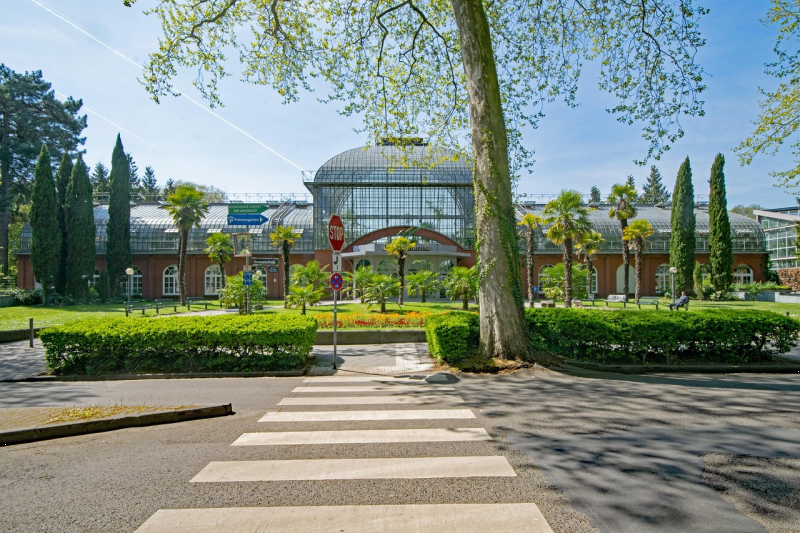
A green oasis in the middle of the city: the Palmengarten is the perfect place to relax. And best of all, the Westend university campus is just a short walk away! (Image from Pixabay)
8. The Palm Garden: Exoticism in the middle of the city
Need a break from the hustle and bustle? The Palm Garden offers the perfect escape into greenery on 22 hectares. It is one of the largest botanical gardens in Germany and is home to plants from almost all climate zones in the world.
- The Palm House: A huge greenhouse made of iron and glass that transports you straight into the jungle.
- Leisure: In summer, you can go rowing on the small lake or relax at open-air concerts.
FAQ: Frequently asked questions about Frankfurt am Main
1. What is the best way to get around Frankfurt?
2. Is Frankfurt attractive for young people?
3. Do I need to purchase a ticket in advance for the Frankfurt Book Fair?
Yes, definitely! Tickets often sell out very quickly, especially for the public days at the weekend. If you want to visit the fair, you should plan your visit at least two months in advance and book your tickets online.
Conclusion: Frankfurt is waiting for you!
Frankfurt am Main is much more than just a banking city. It is a place full of contrasts, international energy and deep history. Whether you come for the skyline, the culture or the career prospects, this city will inspire you. And if you’re planning to take your German to the next level, there’s hardly a more dynamic place to do it.
Which fact surprised you the most?
Did you know the story behind the bull and bear, or did you know that St. Paul’s Church is so important for Germany? Write your opinion in the comments – we look forward to hearing your impressions of Frankfurt!


